Kashmir Heli-Skiing: 2,000-Meter Himalayan Drops
Fly deep into untouched peaks of the Pir Panjal range with Swiss- and Austrian-trained mountain pilots and certified local guides. Experience untracked powder bowls, steep couloirs, and virgin pine tree runs far beyond the reach of the Gondola.
Why Heli-Ski Gulmarg? (Beyond the Gondola)
While the Gulmarg Gondola delivers access up to 3,980 meters on Mount Apharwat, Kashmir Heli-Skiing unlocks the vast, unpatrolled cirques, remote summits, and wild drainage basins of the greater Pir Panjal range.
Landing on high peaks between 4,000 and 4,745 meters allows for single continuous descents of up to 2,000 vertical meters. Runs start in wide-open glacial powder fields, navigate natural rolling gullies, and carve down into pine and birch glades.
Heli-skiing eliminates lift lines and flat return tracks. Every descent finishes at a clear, pre-scouted landing zone where your private 4x4 recovery vehicle or the helicopter awaits.
Signature Heli-Ski Terrains & Flight Zones
| Flight Zone & Peaks | Drop Elevation | Terrain Profile | Skill Level |
|---|---|---|---|
| Sunshine Peak & Upper Cirques | 4,200 m (13,780 ft) | Vast, naturally contoured glacial bowls and wide alpine faces with consistent pitches of 30° to 38°. | Strong intermediate to advanced off-piste skiers. |
| Punch Peak Summit | 4,745 m (15,567 ft) | High-alpine steep faces, technical ridge drops, and direct 40° to 48° couloirs descending into remote valleys. | Expert freeriders and ski mountaineers. |
| Outer Pir Panjal Glades | 3,200 m to 2,200 m (1,000 m drop) | Gladed deodar, cedar, and pine tree runs with deep natural pillow fields and consistent fall lines. | Advanced riders navigating variable tree densities. |
| Remote Valley Drainage Lines | Down to 2,100 m (6,890 ft) | Long 10–12 km wilderness runs dropping through hidden river valleys and concluding with a private 4x4 recovery. | Confident riders with high physical stamina. |
Flight Operations, Pilots, & Mountain Safety
Heli-skiing in the high Himalayas demands rigorous aviation and avalanche protocols:
Aviation Standards & Mountain Pilots
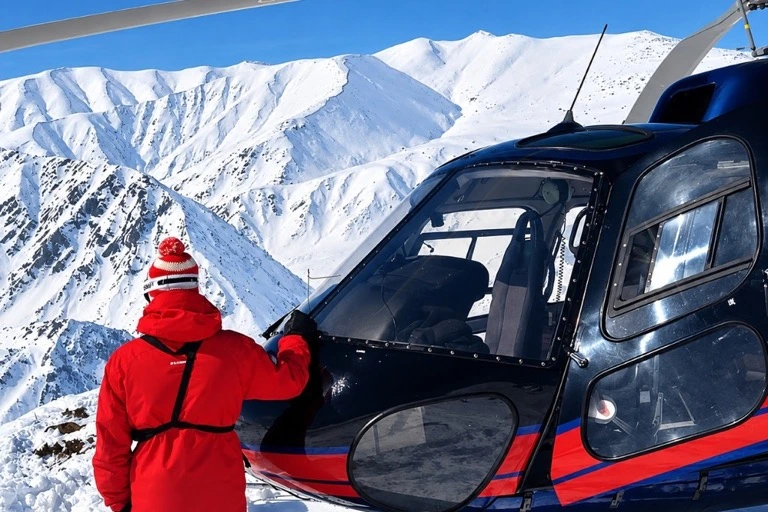
Flights operate with high-altitude Eurocopter AS350 B3 / Airbus H125 helicopters, flown by Swiss- and Austrian-trained alpine pilots with extensive high-altitude flight hours.
Certified Local Lead Guides
Every helicopter group of 4 riders is led by a certified local mountain guide holding international avalanche safety credentials and 10 to 20+ years of active Pir Panjal experience.
Required Safety Equipment (Provided)
Electronic ABS avalanche airbag packs, 3-antenna digital avalanche transceivers, telescopic metal snow probes and quick-deploy shovels, plus VHF radio links connecting guides, pilots, base operations, and local safety patrols.
Daily Morning Routine
Every flight day begins with snowpack stability analysis, weather telemetry review, and mandatory transceiver checks before takeoff.
The "No-Down-Day" Storm Guarantee
High-altitude storms are common in the Himalayas. When severe weather or heavy snow cycles temporarily ground helicopters, your ski days are not wasted:
- Lift-Serviced Storm Guiding Backup: On no-fly storm days, your dedicated heli-guide transitions your group to priority storm riding on Gondola Phase 1 or Mary's Shoulder chairlift.
- Deep Tree Runs to Drung & Baba Reshi: When upper lifts close due to high winds, our guides lead descents through sheltered pine tree glades down to Drung Valley or Baba Reshi, with private 4x4 SUVs waiting at the valley floor for immediate recovery.
- Transparent Vertical Credit: Any unused heli-ski vertical drop or grounded flight time is credited or adjusted per clear package terms.
Recommended Heli-Ski Packages

We Know Our Mountains. Let Us Show You Why We Love Them.

Industry experts passionate about heli-skiing in Kashmir founded Kashmir Heliski in 2011, operating in the Pir Panjal range of the western Himalayas (based at the Gulmarg ski resort in India).
Billa Majeed Bakshi is the Director and Lead Guide at Kashmir Heliski. Hailing from the Gulmarg region of Kashmir, he began working as a ski guide at a very young age. Billa has around two decades of guiding experience spanning locations from New Zealand and the Himalayas to Canada and has been working as a heli-ski guide for Kashmir Heliski since 2011.
Thanks to his guiding expertise, there have been zero accident records to date. In the Himalayas, Billa has guided some of the world's top riders and film crews, including Red Bull, Salomon TV, Warren Miller, TGR (Teton Gravity Research), and Matchstick Productions.
Kashmir Calling
Watch the Red Bull freeride film that put Kashmir's high-alpine lines on the global map , terrain and culture that Kashmir Heliski guides know intimately.
Plan Your Kashmir Heli-Ski Expedition
We strictly limit heli-ski slots during the peak powder window (mid-January through mid-March) to maintain small group safety and pristine line selection. Speak directly with our mountain advisors to reserve your dates.
Kashmir Heliski
Day tasters, multi-day vertical packages, and private charters with certified guiding and ABS safety kits included.
View Heliski PackageFrequently Asked Questions (Heli-Skiing)
Skill level, snowboarders, storm days, and avalanche gear.
You don't need to be an extreme athlete, but you must be a strong intermediate to expert-level rider who is confident skiing ungroomed powder, variable snow, and tree lines. First-time or beginner skiers should start with our nursery slopes or Phase 1 courses before attempting heli-skiing.
Yes. Snowboarders with solid deep-powder experience are welcome. We recommend wide powder boards (260 mm+ waist) and supply 3-piece collapsible poles for convenience on variable terrain.
Safety is paramount. If the weather grounds the helicopter, our guides take your group off-piste into the sheltered pine glades of Phase 1 or down into the Drung Valley with 4x4 vehicle pickup, so you never miss a day on snow. Any unused flight hours are credited or refunded per your agreement.
You don't need to fly with avalanche gear. All packages include professional-grade ABS airbag backpacks, digital transceivers, probes, and shovels, along with full operational training.