Guided Ski Touring & Splitboarding in Gulmarg
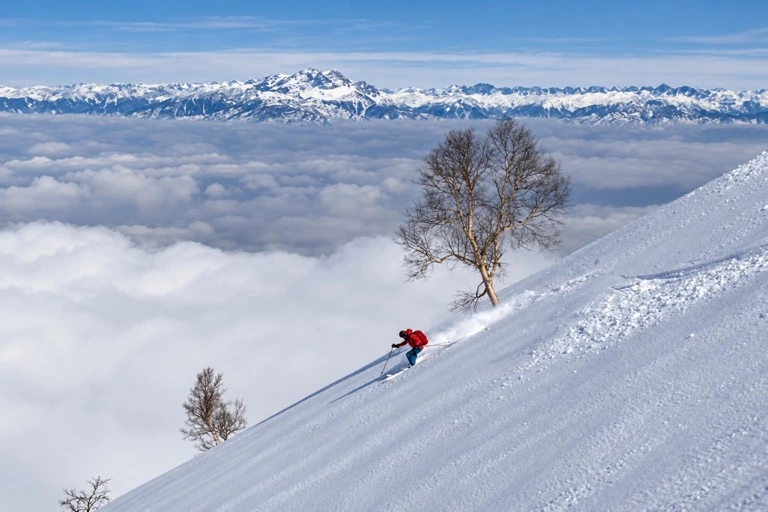
Skin beyond the cable car terminals into untouched glacial bowls, remote couloirs, and sheltered pine forests. Experience lift-assisted Himalayan ski touring with certified local avalanche guides.
Why Ski Tour Gulmarg? (The Lift-Assisted Advantage)
Gulmarg offers one of the most efficient ski touring operations in the world. Instead of spending entire days skinning up from the valley floor, the Gulmarg Gondola carries you directly to 3,980 meters at Apharwat Ridge. From there, a short 45- to 90-minute skin or bootpack opens access to high-alpine summits and untracked descents.
Spurs, bowls, and gullies stream north and south off Mount Apharwat. Tourers can choose between steep technical couloirs, rolling glacial fields, and long gladed tree runs that terminate in remote valley riverbeds.
Backcountry routes are carefully chosen to prevent flat runouts and long traverses. Our local guides select fall lines that maintain consistent downhill momentum directly to base stations or pre-arranged 4x4 recovery vehicles.
Gulmarg Backcountry Skiing: Shark Fin
Watch lift-assisted touring and freeride lines on Shark Fin and the high Apharwat ridges — the same terrain our certified avalanche guides open for ski touring and splitboarding groups.
Signature Ski Touring & Splitboarding Routes
Click any image to open it fullscreen. You can zoom and scroll to inspect route and terrain details.
| Route & Zone | Elevation | Ascent Profile | Descent Profile | Skill Level |
|---|---|---|---|---|
| Shark Fin Ridge & Summit | 4,390 m (14,403 ft) | 45–60 minute bootpack or skin from the Gondola Phase 2 terminal. | Steep 35°–50° technical couloirs and wide powder bowls dropping back into Phase 2 or South Bowl. | Expert freeriders & ski mountaineers. |
| Alpather Lake & South Cirque | 3,843 m to 4,200 m | Gentle 1.5-hour skin along the southern ridgeline toward the frozen lake basin. | Rolling, open glacial bowls with consistent 30° pitches and zero tree cover. | Strong intermediate to advanced tourers. |
| Drung Valley Backcountry Traverse | 3,980 m down to 2,100 m | Short ridgeline traverse followed by ridge touring before the drop. | A continuous 10–12 km descent through alpine fields, pine glades, and riverbeds ending at the frozen waterfall; returns via private 4x4. | Advanced off-piste skiers & splitboarders. |
| Baba Reshi Forest Tour (Storm Day Route) | 3,050 m down to 2,135 m | Low-elevation skinning through old-growth deodars and blue pines. | Deep, sheltered powder tree runs with natural pillows and protection from high winds. | Intermediate to advanced tourers. |
What to Rent vs. What to Pack
Skinning at altitudes above 4,000 meters requires both technical equipment and effective moisture management.
What to Rent On-Site (Ski & Touring Shop):
- Touring Skis: Lightweight backcountry skis equipped with pin/tech touring bindings and tailored pre-cut climbing skins.
- Splitboards: Dedicated freeride splitboards with touring interfaces, skins, and 3-piece collapsible trekking poles.
- Ski Crampons & Boot Crampons: Essential for firm morning snow on high-ridge ascents toward Shark Fin.
- Avalanche Safety Kits: 3-antenna digital transceivers, telescopic metal probes, metal shovels, and lightweight ABS airbag packs.
What to Pack in Your Touring Pack:
- Layering System: Breathable softshell touring jacket and pants (leave heavy, insulated resort outerwear behind while skinning).
- Lightweight Touring Gloves: Thin liner gloves for uphill skinning, plus warm waterproof mittens for the descent.
- Hydration & Nutrition: Insulated water bottle (hydration hoses freeze easily at 4,000 m) and high-calorie energy bars.
- Sun Protection: UV-blocking Category 3 or 4 sunglasses for high-altitude snow reflection, plus broad-spectrum SPF lip balm.
Backcountry Avalanche Safety Protocols
Touring beyond the controlled ski boundaries on Mount Apharwat requires strict alpine discipline:
Certified Local Avalanche Guides
Every tour is led by a Kashmiri mountaineer certified in avalanche risk assessment, with a decade or more of high-altitude experience.
Daily Morning Snow Pit Evaluation
Before choosing a route, guides check local snowpack shears, wind-slab formation, and temperature variations across north and south aspects.
Mandatory Safety Briefing
Every participant undergoes a beacon trail check, transceiver range test, and emergency companion rescue protocol review before departure.
Emergency Logistics
Lead guides carry satellite tracking devices, VHF radios linked to local ski patrol, and first-aid trauma kits.
Recommended Ski Touring Packages

Additional Sample Backcountry Routes
- 1
Route 1
Affarwat (G4) – Lianmarg – Boothapathri – Gulmarg
7 hours - 2
Route 2
Affarwat – Sharkfin – Snow Leopard Face – Gulmarg
4 hours - 3
Route 3
Gulmarg – Drung Ridge – Drung Valley – Tanmarg
2 hours
Plan Your Gulmarg Ski Touring Expedition
Speak directly with our certified backcountry guides to check current mountain snow conditions, reserve touring setups, or tailor a private itinerary.
Backcountry & Splitboard
Lift-assisted touring from Apharwat Ridge to Shark Fin, Alpather Lake, and Drung Valley with certified avalanche guides (1:4) and 4x4 valley recovery.
Frequently Asked Questions (Ski Touring)
Experience level, skinning times, splitboards, and best season for touring.
You should have strong off-piste skiing or snowboarding skills and good aerobic fitness. If you have never used climbing skins or tech bindings before, our guides offer a half-day intro session on the lower slopes to practice skinning mechanics and kick-turns before heading into the alpine.
Because we use the Gondola to reach 3,980 meters, typical high-alpine ascents to Shark Fin or South Ridge take between 45 minutes and 2 hours. Valley-to-valley tours like Drung or Baba Reshi are predominantly continuous descents with short skin sections.
Yes. Our guides match groups based on overall fitness and downhill riding ability. We provide 3-piece collapsible poles and plan skin tracks that accommodate both skis and splitboards without awkward transitions.
Late February through March and early April offer the most stable high-altitude snowpack, longer daylight hours, and milder temperatures for skinning high alpine ridges and descents around Alpather Lake.